In This Article
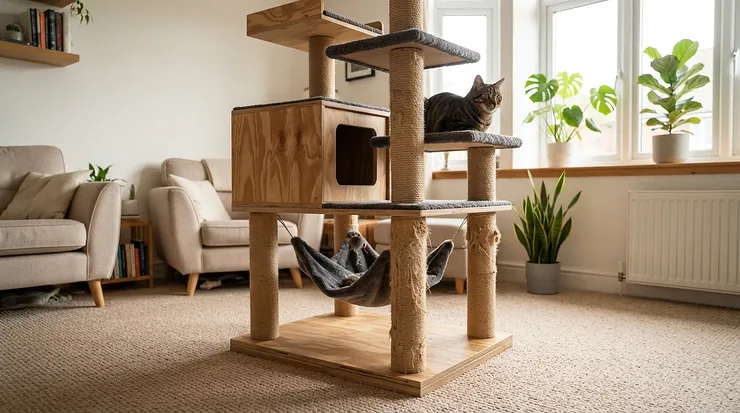
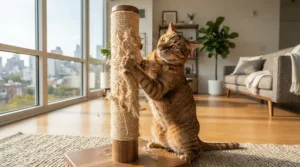
Some cats scratch. Others demolish. If yours treats the sofa arm like a personal gym and the last scratching post like a chew toy, you already know the cycle: buy a tower, watch the sisal turn to a shaggy mess in three months, and curse the day you trusted a flimsy 2-inch pole. The fix isn’t a tougher cat (good luck). It’s a cat tree with thick sisal posts for big scratchers, built so the post doesn’t flex, the base doesn’t walk across the room, and the rope survives a determined 18-pound Maine Coon.
This guide cuts through the marketing. Based on a research pass through editorial roundups, retailer spec sheets, and veterinary and shelter guidance, I’ve pulled together seven real trees that suit heavy-duty scratching, plus the numbers that matter: post diameter, rope thickness, stretch height, and how to swap out a wrecked post instead of binning the whole tree. If you’re hunting for a heavy scratcher cat tree with wide sisal posts, you’ll find the benchmarks here. If you want a large cat tree with replaceable sisal, there’s a full section on that too.
A quick honesty note before we dive in: I haven’t personally tested these trees, and I won’t pretend otherwise. What follows is analysis built on published specs, editorial test notes, and the patterns reviewers keep repeating. Where a detail couldn’t be verified, I say so.
Quick Comparison Table: Our 7 Picks at a Glance
| Product | Height | Sisal Setup | Best For |
|---|---|---|---|
| Globlazer F70 Pro | 70 in | 4 sisal posts | All-round heavy use |
| Globlazer Z78 | 78 in | 6 posts, 2 large platforms | Maine Coons, tall rooms |
| Yaheetech 63-Inch Sturdy Large Cat Tree | 63 in | 7 sisal posts, 30.5 x 19 in base | Budget-minded multi-level climbing |
| MUTTROS 67-Inch Cat Tree | 67 in | 13 scratching posts | Multi-cat homes |
| Feandrea 40.6-Inch Cat Tree (UPCT614W01) | 40.6 in | Sisal post, large perch | Small spaces, XL cats |
| Happi N Pets 28-Inch Cat Tree | 28 in | Thick sisal-wrapped posts | Compact big-cat perch |
| Prestige Cat Trees Maine Coon Deluxe | Varies by model | Solid-wood build | Premium, long-term buy |
Read the table as a map, not a verdict. The Globlazer F70 Pro is the most-recommended generalist in the roundups I reviewed, while the MUTTROS 67-Inch Cat Tree wins on sheer scratching surface. The Happi N Pets 28-Inch Cat Tree is the sleeper: short, but its oversized perch (about 23.6 x 15.7 inches) suits big bodies. Pick by room height and cat count first, then by price. All prices are “check current price” territory, since they move constantly.
💬 Just one click — help others make better buying decisions too!😊
What Is a Cat Tree With Thick Sisal Posts for Big Scratchers?
A cat tree with thick sisal posts for big scratchers is a multi-level cat tower whose vertical posts are wide (ideally around 4 inches or more) and wrapped tightly in natural sisal rope, paired with a heavy base. It’s engineered so powerful, full-stretch scratching doesn’t flex the post, tip the tower, or shred the covering within weeks. Cats use it to stretch, mark territory, shed claw sheaths, and climb.
The scratching itself is not a bad habit to correct. Per the Wikipedia entry on scratching posts, a good post is mounted vertically in a wide base so a cat can stretch upward on its rear legs without toppling it. That one sentence explains most of what goes wrong with cheap towers.
Top 7 Cat Trees With Thick Sisal Posts: Expert Analysis
A note on method: specs come from retailer and editorial listings. Review sentiment is summarized from editorial roundups, because I could not verify a large, statistically meaningful pool of Amazon reviews for every model. Price bands are approximate and change often.
1. Globlazer F70 Pro — best all-rounder for heavy scratchers
The Globlazer F70 Pro stands 70 inches tall, with four sisal posts, an enlarged hammock and condo, and a detachable top perch. The standout is the overall balance: it’s tall enough for a full vertical stretch yet doesn’t sprawl across your living room.
Four sisal-wrapped posts matter because load is spread across several uprights rather than one stressed column. A tall frame also invites the full-body pull that scratchers crave. Editorial roundups name it a top pick for large cats, and one reviewer reported the fabric still looked new after 30 days of use, though that is a single editorial observation, not a durability guarantee.
Who’s it for? Owners of one or two big cats in a normal-height room who want a do-it-all tower. If your ceiling is low, measure first.
Pros:
- ✅ Spacious hammock suits large bodies
- ✅ Tall frame allows full vertical stretch
- ✅ Four sisal posts spread the scratching load
Cons:
- ❌ Needs real floor space and ceiling clearance
- ❌ Post diameter is not consistently published
Price range: mid-range territory, check current price. Value verdict: strong, provided you anchor it to a wall.
2. Globlazer Z78 — tallest for Maine Coon stretch zones
The Globlazer Z78 reaches 78 inches with six posts, two large platforms, and two condos. For a long-bodied cat, height is everything. A Maine Coon is long rather than merely heavy, so a tall tower gives that extra reach during a stretch.
Six posts mean more scratching real estate, which reduces the “everyone fights over one pole” problem in multi-cat homes. Roundups label it the best Maine Coon option in their lineup. The trade-off is physical: 78 inches is a lot of tower, and tall trees amplify any wobble, so wall anchoring isn’t optional here.
If you have a vaulted ceiling or a sunroom, this is the dramatic centerpiece. In a cramped apartment, it’s overkill.
Pros:
- ✅ Extra height for the longest stretches
- ✅ Six posts offer lots of scratch surface
- ✅ Two big platforms for large cats
Cons:
- ❌ Tall frame demands a wall anchor
- ❌ Overkill for small rooms
Price range: mid-to-upper range, check current price. Value verdict: excellent for tall rooms and big breeds, wasteful elsewhere.
3. Yaheetech 63-Inch Sturdy Large Cat Tree — wide base without a premium price
The Yaheetech 63-Inch Sturdy Large Cat Tree pairs a reinforced 30.5 x 19 inch base with seven sisal posts, five platforms, and a hammock rated around 18 to 22 pounds depending on the listing. That base footprint is the headline: the wider the base relative to height, the harder it is for a heavy cat to rotate the tower.
The hammock rating deserves a reality check. If your cat tops 18 pounds, treat the hammock as a lounge for part of the body, not a cradle for the whole thing, or choose a model with a higher stated capacity. Editorial reviewers placed it among the best large-cat trees on a value basis.
Think of it as the “sensible shoes” pick: not glamorous, but it stays upright.
Pros:
- ✅ Wide reinforced base improves stability
- ✅ Seven sisal posts, five platforms
- ✅ Solid value for multi-level climbing
Cons:
- ❌ Hammock capacity limits very heavy cats
- ❌ Sisal thickness varies, so inspect on arrival
Price range: budget-to-mid range, check current price. Value verdict: one of the better value plays for big cats.
4. MUTTROS 67-Inch Cat Tree — 13 posts for crowded households
The MUTTROS 67-Inch Cat Tree advertises 13 scratching posts, an XXL condo, FSC-certified wood, and a total load rating around 220 pounds. Thirteen posts is a lot of surface, and that’s the point: in multi-cat homes, more posts mean fewer turf wars.
Here’s the analytical catch. Many posts doesn’t automatically mean thick posts. Count is not diameter, so check the listing for post width before assuming it survives a 20-pound shredder. The 220-pound total capacity suggests a robust frame, which is reassuring for households with several cats using it at once.
Choose this when you have a cat gang, not one lone scratcher.
Pros:
- ✅ Huge scratching surface from 13 posts
- ✅ XXL condo suits big cats
- ✅ FSC-certified wood
Cons:
- ❌ Post diameter needs checking before purchase
- ❌ Large footprint in smaller rooms
Price range: mid range, check current price. Value verdict: great for multi-cat homes.
5. Feandrea 40.6-Inch Cat Tree (UPCT614W01) — compact tower marketed for extra-large cats
The Feandrea 40.6-Inch Cat Tree is listed for extra-large cats up to 44 pounds, with a large perch, two caves, and a scratching post. It’s low-slung, which suits renters and small spaces, and it keeps the center of gravity down, a real stability advantage.
The catch is stretch height. At roughly 40 inches, a very long cat might not fully extend on the post, which weakens the “vertical stretch” benefit. One Canadian roundup also flagged that sisal on Feandrea models can wear over time. Treat this as a perch-first, scratcher-second tower, and pair it with a taller dedicated post if your cat is a stretch-and-pull type.
Pros:
- ✅ Low, stable profile suits small rooms
- ✅ Large perch for oversized cats
- ✅ Two caves for retreat
Cons:
- ❌ Limited height for a full stretch
- ❌ Sisal may wear faster under heavy use
Price range: budget-to-mid range, check current price. Value verdict: good compact buy, less ideal for relentless scratchers.
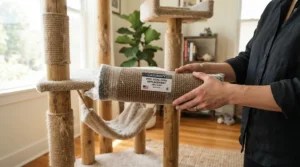
6. Happi N Pets 28-Inch Cat Tree — smallest footprint with a Maine Coon-sized perch
The Happi N Pets 28-Inch Cat Tree features an extra-large perch of about 23.6 x 15.7 inches, a heavy-duty base, a machine-washable cushion, and sisal-wrapped posts that one reviewer called thick and sturdy.
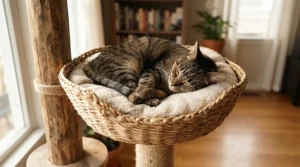
On paper, a 28-inch tree looks too short to matter, but the perch is generous enough for a Maine Coon to sprawl. For heavy scratchers, treat this as a rock-solid lounge with scratching on the side. Its washable cushion is a quiet bonus when your cat sheds like a dandelion.
It won’t satisfy a tall-stretch fanatic, but as a secondary station, it’s smart.
Pros:
- ✅ Oversized perch fits big breeds
- ✅ Heavy-duty base resists tipping
- ✅ Machine-washable cushion
Cons:
- ❌ Too short for full vertical stretching
- ❌ Limited climbing levels
Price range: budget range, check current price. Value verdict: strong as a supplementary perch.
7. Prestige Cat Trees Maine Coon Deluxe — made in the USA, solid-wood premium pick
The Prestige Cat Trees Maine Coon Deluxe Cat Perch is marketed as a sturdy, solid-wood, made-in-USA build for big cats. This is the “buy once, cry once” option. Solid wood generally resists flex better than particleboard, which is where cheaper towers tend to fail first.
Premium trees cost more upfront, but the cost-per-year math often favors them when a heavy cat is involved. I couldn’t verify a large pool of Amazon reviews for this exact model, so confirm current specs, post diameter, and configuration on the listing before ordering.
Pros:
- ✅ Solid-wood construction for stability
- ✅ Built for large breeds
- ✅ Made in the USA
Cons:
- ❌ Premium pricing
- ❌ Fewer climbing features than budget towers
Price range: premium range, check current price. Value verdict: best long-term investment if budget allows.
Top 7 Comparison: What the Differences Mean
| Product | Strength | Weakness | Best For |
|---|---|---|---|
| Globlazer F70 Pro | Balanced height and hammock | Needs clearance | One or two big cats |
| Globlazer Z78 | Maximum stretch height | Tipping risk without anchor | Maine Coons |
| Yaheetech 63-Inch Sturdy Large Cat Tree | Wide base, value | Hammock limit | Budget shoppers |
| MUTTROS 67-Inch Cat Tree | 13 posts, 220 lb capacity | Post thickness unclear | Multi-cat homes |
| Feandrea 40.6-Inch Cat Tree | Compact, stable | Short post | Apartments |
| Happi N Pets 28-Inch Cat Tree | Huge perch | Too short to stretch | Secondary station |
| Prestige Cat Trees Maine Coon Deluxe | Solid wood | Cost | Long-term buyers |
Looking at the comparison above, the Globlazer F70 Pro is the safest pick if you want height without overcommitting space, while the MUTTROS 67-Inch Cat Tree makes sense only if your household has several cats sharing one tower. Shoppers watching the budget should note that the Feandrea 40.6-Inch Cat Tree and Happi N Pets 28-Inch Cat Tree trade height for compactness, so they work best as supplements rather than your only scratching surface.
💬 Just one click — help others make better buying decisions too!😊
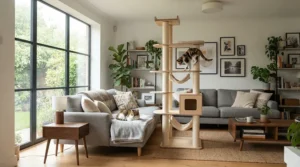
Sisal Rope Diameter: What Thickness Actually Survives Big Scratchers
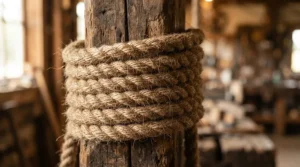
Rope thickness is the quiet hero of this whole category. Thin, loosely wound rope frays fast; thick, tightly glued rope holds up. Buyer guides in my research recommend rope at least 6 mm thick, ideally 8 mm for large cats, wound tightly and glued rather than just stapled. Replacement rope sold for DIY repairs commonly runs 4 to 6 mm, which is fine for light scratchers but on the thin side for a 20-pound shredder.
Don’t confuse rope diameter with post diameter. The rope is the surface; the post is the structure. A post around 4 inches (about 10 cm) or wider resists flex, while thinner 2.8-inch posts are common on budget towers and are better suited to medium cats. As a practical reference, one commercial XL scratching tower lists a 20 cm post wrapped in 5 mm sisal rope, proof that a fat post with modest rope can still perform, because the sheer mass gives it stability.
Quick takeaway: prioritize post width for stability, then rope thickness and tight winding for durability.
How to Choose a Cat Tree With Thick Sisal Posts for Big Scratchers
- Measure your cat’s full stretch. The tallest post should clear your cat’s stretched length, or the stretching benefit disappears.
- Check post diameter. Aim for roughly 4 inches (10 cm) or more for heavy cats; anything near 2.8 inches is borderline.
- Inspect rope thickness and winding. Look for 6 to 8 mm rope that’s wound tightly and glued.
- Judge the base. A heavy, wide base relative to height is what stops tipping; a 30-inch-class footprint is a good sign on taller models.
- Match perch size to your cat. Perches should exceed your cat’s curled diameter so paws and tails don’t dangle.
- Confirm weight ratings honestly. Hammocks often carry lower limits than frames.
- Look for replaceable posts. Modular posts extend the life of the whole tree.
Vertical Scratching Stretch: Why Height Is a Health Feature
Cats don’t just scratch to maintain claws. According to International Cat Care, scratching helps cats keep claws sharp, exercise, stretch their muscles, and mark territory, and a post should be tall enough for scratching at full stretch. For a cat who rises up and pulls, a short post is like handing a runner a treadmill with the belt jammed.
A practical rule: the post should be at least as tall as your cat’s stretched body. Many guides cite a minimum of around 30 inches for typical adult cats, with taller posts for large breeds. One retail guide for big cats suggests aiming for roughly 82 cm (about 32 inches) at minimum.
Height without stability backfires. A wobbly post teaches your cat the post is unreliable, and your sofa becomes the better option. That’s why the base, the post width, and the wall anchor matter as much as the tower’s height.
Heavy Scratcher Cat Tree With Wide Sisal Posts: Features That Actually Matter (And Those That Don’t)
Features that matter: a wide base, thick posts, tight rope, oversized perches, and solid joinery. Those are the load-bearing elements, literally.
Features that don’t: dangling toys (cats ignore them within a week), decorative faux-fur flourishes, and a long list of tiny condos too small for a big cat to enter. A cat who can’t fit in the cubby won’t use it, and a cubby with a “cozy” opening smaller than your cat’s shoulders is just a decoration.
Hammock capacity deserves special suspicion. Many listings advertise a total tower capacity but cap hammocks at a much lower weight, so match your cat’s actual weight to the weakest component, not the headline number.
Large Cat Tree With Replaceable Sisal: How Post Replacement Extends Your Tree’s Life
The most overlooked money-saver in this category is a tree with replaceable posts. Sisal wears out well before the frame does, so swapping a post is far cheaper than replacing the whole tower. One buyer guide notes that some models are designed with replaceable posts for exactly this reason.
Standardized replacement posts exist, such as Trixie replacement sisal posts (in sizes like 9 x 30 cm with threaded fittings) and multi-packs like the TIMHAKA 4-piece 15.7-inch replacement set, which uses M8 screws. The key is matching the thread type (M8 or M10 are common) and diameter to your existing tree.
If your tree wasn’t designed for swaps, you can re-wrap with sisal rope instead. Remove old rope with pliers and scissors, scrape off old glue, and rewrap tightly with fresh rope, securing it with non-toxic adhesive.
Transformation Guide: Setup, Anchoring, and 30-Day Maintenance
Setup That Prevents Wobble
Assemble on a hard, level floor and tighten every bolt twice: once during assembly and again after a full day of use. Place the tower in a corner so two walls support it, and use the included anti-tip kit on any tree taller than about five feet. Position it near your cat’s bed, since cats love to stretch right after waking.
The First 30 Days
- Week 1: Rub a little catnip on the posts and place the tower where your cat already scratches.
- Weeks 2-3: Re-tighten hardware, check for loose rope ends, and trim fraying strands.
- Week 4: Look for wear patterns; if one post is shredded, swap it first.
Common First-Month Mistakes
Putting the tower in a dead-end corner your cat never visits, skipping the wall anchor, and ignoring loose screws are the classics. Another: placing the tree next to the sofa without covering the sofa arm temporarily. Redirect, don’t punish.
Real-World Scenarios: Which Tree Fits Which Household?
Scenario 1: One 18-pound Maine Coon in a Two-Bedroom Apartment
A tall tower with a wall anchor fits best, so the Globlazer F70 Pro is the logical choice, with the Happi N Pets 28-Inch Cat Tree as a secondary lounging perch near the window. The combined cost stays reasonable, and you cover both stretch and lounge needs.
Scenario 2: Three Cats, a Rented House, Tight Budget
The Yaheetech 63-Inch Sturdy Large Cat Tree delivers the width and multi-level climbing at a friendly price, while the MUTTROS 67-Inch Cat Tree adds scratching surface if the budget stretches. Keep a pack of replacement posts on hand.
Scenario 3: One Very Heavy, Very Destructive Scratcher, Money No Object
Go with the Prestige Cat Trees Maine Coon Deluxe, and add a tall dedicated vertical post for the stretch. Solid wood plus a purpose-built post beats flexible particleboard every time.
Cat Tree vs. Standalone Scratching Post: Which Is Better for Big Scratchers?
A cat tree gives climbing, lounging, and scratching in one footprint. A standalone post, on the other hand, often delivers more height and a thicker single column. For a confirmed vertical stretcher, a tall standalone post can outperform the posts built into a budget tree, which are often short.
The smart play for heavy scratchers is often a combo: a stable tree for lounging and climbing, plus a tall dedicated post near the sofa. According to guidance from the American Association of Feline Practitioners, cats need a sturdy post taller than their body length to stretch and scratch fully, and you can train them to use approved items. That supports the combo approach: give each cat options, then observe which they prefer.
Common Mistakes When Buying a Cat Tree for Big Scratchers
Chasing height over stability. A 78-inch tower on a thin base is a tipping hazard. Prefer a wide, heavy footprint.
Trusting “heavy duty” in the title. The label means nothing until you verify post diameter, base size, and capacity ratings.
Ignoring hammock limits. As noted earlier, hammocks often have much lower ratings than the frame.
Skipping the wall anchor. Anything tall should be anchored, full stop.
Forgetting replacement options. If you can’t swap posts later, you’ll eventually replace the whole tree.
Long-Term Cost and Maintenance: The Real Math
A cheap tree that lasts six months costs more per month than a pricier tree that lasts three years. Consider total cost of ownership: initial price, replacement posts, rope refreshes, and the cost of the furniture your cat redirects to if the tree fails.
Rough logic: if a premium solid-wood tree costs two to three times more than a budget model but lasts four or five times longer under heavy use, the premium wins on cost per year. Add modest maintenance, a tightening check every month or two, a rope refresh every year or so, and you can stretch a quality tree’s life considerably. Replaceable posts and re-wrapping extend that horizon further.
Safety and Anchoring Guide for Tall Cat Trees
Tall trees are physics experiments waiting to happen. A heavy cat landing on a top perch with real momentum can try to rotate the entire structure around the front edge of its base. That’s why a wall anchor is a safety feature, not an accessory.
Best practices: anchor to a stud where possible, keep the tree away from windows with cords or blinds, and inspect connections regularly. Watch your cat’s behavior too: a cat that stops using a tree may be telling you it feels unstable. Kittens and seniors need lower, easier-to-reach platforms, so consider step-by-step ramps if your cat has joint trouble.
Cat Tree for Specific Audiences: Beginners, Multi-Cat Homes, and Seniors
Beginners: start with a moderately tall, stable tower and a clear scratching zone near where your cat already claws things.
Multi-cat homes: prioritize multiple scratching stations and several perches, so cats don’t compete. The MUTTROS 67-Inch Cat Tree is built around this idea.
Seniors: opt for lower platforms and wide, stable bases like the Feandrea 40.6-Inch Cat Tree. Per shelter guidance, a post must be sturdy and tall enough for stretching, and you should entice your cat to use it with praise, as Maddie’s Fund recommends.

FAQ
❓ What post diameter is best for a heavy cat tree?
❓ How thick should sisal rope be on a scratching post?
❓ Can I replace the sisal on my cat tree?
❓ How tall should a scratching post be for a large cat?
❓ Do I need to anchor a tall cat tree to the wall?
Conclusion
Big scratchers don’t need a bigger cat tree so much as a better-built one: a wide base, a post thick enough not to flex, tightly wound rope, and the ability to swap worn posts instead of tossing the tower. Start with your cat’s stretched length, your room’s ceiling height, and the number of cats, then match one of the seven trees above to that reality. The Globlazer F70 Pro is the safest all-round starting point, the Yaheetech 63-Inch Sturdy Large Cat Tree is the value pick, and the Prestige Cat Trees Maine Coon Deluxe is the long-game investment.
Recommended for You
- [Add your blog post link 1]
- [Add your blog post link 2]
- [Add your blog post link 3]
Disclaimer: This article contains affiliate links. As an Amazon Associate, I earn from qualifying purchases. If you purchase products through these links, we may earn a small commission at no additional cost to you.
✨ Found this helpful? Share it with your friends! 💬🤗
