In This Article
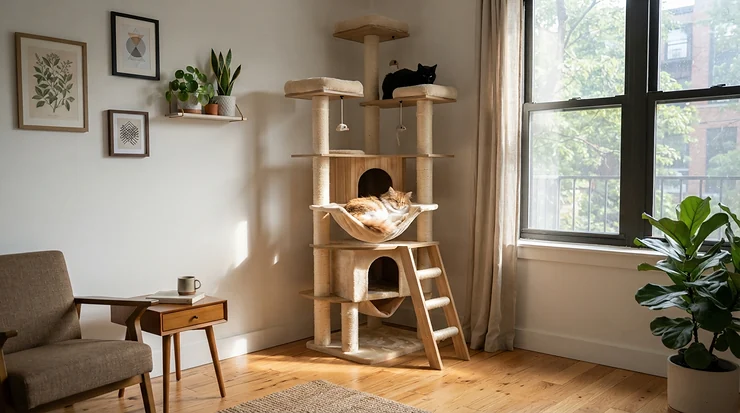
Most cat furniture is designed for a cat that doesn’t exist: a tidy nine-pound shorthair who folds herself into a croissant. Your cat is not that cat. If you live with a Maine Coon, a Ragdoll, a Norwegian Forest cat, or just a generously proportioned domestic shorthair, a large cat tree with enclosed cubby for big cats isn’t a luxury. It’s the difference between a hideaway your cat actually uses and a monument to wasted money that collects dust in the corner.
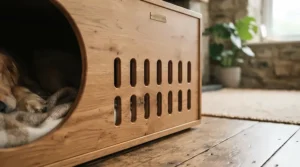
The trouble starts with a single word. “Large” on a product listing is a marketing adjective, not a measurement. Maine Coons, which rank among the largest domesticated cat breeds, routinely outgrow cubbies sold as “extra large.” Then comes the shoulder-scrape at the entrance, the paw dangling out of a too-short perch, and the slow, silent boycott.
So this guide skips the adjectives and goes after numbers. You’ll see seven real trees compared on cubby interior dimensions, entry hole diameter, and ventilation openings, the three specs that decide whether a big cat condo with roomy hideaway becomes your cat’s favorite room or an expensive coat rack.
One honest note before the rankings. Everything here is built from manufacturer specs and aggregated buyer feedback, not from a living-room lab. Where a number couldn’t be verified, you’ll be told so instead of getting a confident guess.
Quick Comparison Table: 7 Trees at a Glance
| Product | Height | Cubby Facts (as published) | Key Spec | Price Range* | Best For |
|---|---|---|---|---|---|
| PAWZ Road 81 Inch | 81 in | 2 large caves, 3 openings each | Built for 20+ lb cats; 1.2-in base plate | ~$100-$170 | Multi-cat households |
| Feandrea 40.6-Inch | 40.6 in | 2 caves (upper has 2 doors, lower has 1) | Listed up to 44 lb | Under ~$80 | Small rooms, tight budgets |
| Yaheetech 63in | 63 in | Condo rated to 22 lb | Strong review volume | ~$50-$90 | First-time big-cat owners |
| Globlazer F61 | 61 in | 2 condos, 17.7×15.7×13.8 in each | 17.7-in top perch | ~$80-$130 | Verified cubby size, moderate height |
| Globlazer Giant F83 | ~84 in | 2 extra-large condos | 9 sisal posts | ~$120-$190 | High ceilings |
| MWPO Extra Large | 70.1 in | 3 large fabric-walled condos | ~58.5 lb total weight | ~$100-$180 | Airflow lovers, multi-cat homes |
| Gitelsnour Maine Coon 70-Inch | 70 in | 2 caves, 15.7×17.7 in | ~49 lb; reviewers report 30+ lb cats | ~$110-$190 | The heaviest cats |
*Ballpark ranges at the time of research. Prices vary, so check the current price before buying.
Looking at the table, Feandrea 40.6-Inch and Yaheetech 63in win on cost, while Globlazer F61 is the only one here with a fully published cubby that nearly meets the big-cat benchmark. If your cat is a true heavyweight, Gitelsnour Maine Coon 70-Inch and PAWZ Road 81 Inch are the stronger bets, because mass and base design matter more than height. Treat the price column as a tier guide rather than a quote, since retailers shuffle it constantly.
💬 Just one click — help others make better buying decisions too!😊
Top 7 Large Cat Trees With Enclosed Cubbies for Big Cats: Expert Analysis
Each pick below pairs the published specs with what they mean in a real living room, plus the recurring themes from buyer feedback. Think of it as reading the spec sheet with a skeptical friend.
1. PAWZ Road 81 Inch — best cubby traffic flow for multi-cat homes
The standout is the cave design: each of the two large caves reportedly has three openings, so no cat gets cornered and a second cat can’t blockade the first.
This tower rises 81 inches across eight levels and is aimed at cats 20 pounds and up. The 1.2-inch base plate lowers the tipping point when a heavy cat launches from the floor, and the hammock is secured at four points rather than two. That detail matters because hammock anchors are where cheaper trees tend to fail first under big-cat weight.
Here’s the analytical catch. Three openings give excellent airflow and escape routes, but a cat who wants a dark, womb-like den may treat it as a lookout instead. It suits households where the cubby is shared real estate, not one cat’s private bunker.
Roundup coverage of buyer feedback describes the tree as sturdy with several cats in play and manageable to assemble in about an hour. The recurring complaints are a hanging pouch that can rip under hard use and a slight wobble until the tree is anchored to the wall.
Pros:
- ✅ Three openings per cave for airflow and exits
- ✅ Four-point hammock mounting for heavy cats
- ✅ Thick base plate for floor-level stability
Cons:
- ❌ Wobbles a little unless wall-anchored
- ❌ Hanging pouch may tear with rough use
Price: ballpark $100-$170, so check the current price. Verdict: strong value if you have two or more cats and a stud to anchor into.
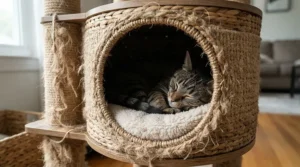
2. Feandrea 40.6-Inch — listed for cats up to 44 lb in a compact footprint
Short trees get overlooked, and that’s a mistake, because height is stability’s enemy when a big cat leaps.
The listing rates this one for extra-large cats up to 44 pounds, and the top perch measures 26.8 by 18.9 inches. That’s wide enough for a 20-pound cat to sprawl sideways instead of draping over the edge. The two caves differ on purpose: the upper has two doors (a lookout), while the lower has one (a true den).
At 40.6 inches the center of gravity stays low, which makes the tree feel planted even for athletic jumpers. The trade-off is less vertical territory, so it works best when it’s one piece of a larger cat setup.
Coverage of buyer feedback points to more than 15,000 Amazon reviews at roughly a 4.6 average. Maine Coon and Ragdoll owners report their cats gravitate to the big top perch, and some say the bottom cubby gets ignored. That’s honest signal: this is a perch-first tree with cubbies as a bonus.
Pros:
- ✅ Oversized 26.8×18.9-inch perch
- ✅ Low, stable profile for room corners
- ✅ Single-door lower cave works as a real den
Cons:
- ❌ Some cats skip the bottom cubby
- ❌ Covering can wear under aggressive scratchers
Price: under roughly $80, so check the current price. Verdict: the best entry point for apartments and tight budgets.
3. Yaheetech 63in — the crowd-tested budget workhorse
Review volume is its credential: more than 8,000 buyers have rated it, and the average sits around 4.7 stars according to roundup coverage.
It stands 63 inches tall with five platforms, a condo rated to 22 pounds, a hammock rated to 18 pounds, and a foam-edged perch of 21 by 15 inches. It also has seven sisal posts, a wall-mount kit, and CARB P2 certified board. In practice, a 22-pound condo rating leaves a thin margin for a 20-pound cat who hops in, so this fits cats up to the high teens better than true giants.
The cubby’s interior dimensions and entry hole weren’t verifiable in the sources reviewed. Measure the listing’s published numbers against the benchmarks later in this guide before you buy.
Buyers praise its sturdiness for the price. The complaints are occasional missing screws and platforms that feel small to some adult cats.
Pros:
- ✅ Large review base with strong ratings
- ✅ Wall-mount kit included
- ✅ Seven sisal posts plus a scratching board
Cons:
- ❌ Perch may feel small to giant cats
- ❌ Cubby measurements aren’t clearly published
Price: roughly $50-$90, so check the current price. Verdict: the sensible first purchase for cats under about 18 pounds.
4. Globlazer F61 — the best published cubby dimensions under 65 inches
This is the tree where the spec sheet finally answers the question you came with.
Each of the two condos measures 17.7 by 15.7 by 13.8 inches, and the top perch is 17.7 by 15.7 inches, with seven sisal posts and an engineered-wood frame. Against a common big-cat benchmark of roughly 17×17×13 inches for cubby interior dimensions, it clears the length and height but falls about an inch and a half short on width. That’s close enough for most large cats to turn around, though a barrel-chested Maine Coon may find it snug.
At 61 inches, it also sidesteps the tall-tower wobble problem. Honest limitation: broad buyer-sentiment data for this specific model wasn’t verifiable in the sources reviewed, so this pick leans on specs rather than review volume.
Pros:
- ✅ Published cubby dimensions near big-cat benchmarks
- ✅ Moderate height means better stability
- ✅ Seven sisal posts across levels
Cons:
- ❌ Cubby width slightly under benchmark
- ❌ Engineered wood is lighter than solid wood
Price: ballpark $80-$130, so check the current price. Verdict: a spec-driven pick for owners who care about cubby size most.
5. Globlazer Giant F83 — maximum vertical territory with extra-large condos
If your ceilings are high and your cat treats the floor as lava, this is the vertical playground.
It stands roughly 84 inches with a trapezoidal base, nine sisal posts, two extra-large condos, and a fan-shaped top platform of about 55 by 45 centimeters (roughly 21.7 by 17.7 inches). That platform is big enough for a 20-pound cat to lie flat, and buyers say their 20-plus-pound cats fit without hanging off the edge.
The analytical flag is weight. Roundups list the tree at roughly 36 pounds, which is light for something nearly seven feet tall. The trapezoid base helps, but the wall strap isn’t optional here.
Reviewers also note that some condo doorways feel small for very large cats, and assembly can run 45 to 90 minutes. Measure the door against your cat’s shoulders before committing.
Pros:
- ✅ Nine sisal posts for heavy scratchers
- ✅ Large fan-shaped top platform
- ✅ Trapezoid base improves footprint
Cons:
- ❌ Needs wall anchoring for real stability
- ❌ Condo doorways tight for the biggest cats
Price: ballpark $120-$190, so check the current price. Verdict: worth it only if you’ll anchor it and your cat’s shoulders clear the doors.
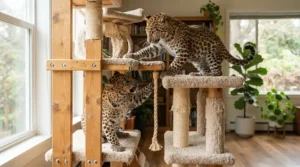
6. MWPO Extra Large — three condos with breathable fabric walls
The headline is the condo count: three large cubbies, which makes this the natural choice for households where one hideaway always turns into a turf war.
It stands 70.1 inches tall on a reinforced 27.5 by 17.7-inch base, weighs roughly 58.5 pounds, and includes an anti-tip strap, 11 scratching posts, two padded perches, and a hanging hammock. That weight is the real selling point: heft absorbs jump impact instead of passing it up the posts.
The wrinkle is the walls. Roundup notes say the condos use fabric sides rather than solid panels, so this is more see-through nest than sealed den. That boosts airflow but gives less seclusion, which suits confident cats and may disappoint hiders.
Buyers mention it handles simultaneous climbing well, and the assembly takes about an hour.
Pros:
- ✅ Three full-size condos for multiple cats
- ✅ Heavy, wide base resists rocking
- ✅ Eleven scratching posts spread the wear
Cons:
- ❌ Fabric walls offer less privacy
- ❌ Roughly an hour of assembly
Price: ballpark $100-$180, so check the current price. Verdict: a smart pick for multi-cat homes that prize airflow over total seclusion.
7. Gitelsnour Maine Coon 70-Inch — reviewer-backed for 30-pound-plus cats
Plenty of trees claim big-cat compatibility, but this one has multiple buyers vouching for chunky cats of 30 pounds and up.
It stands 70 inches tall, weighs about 49 pounds, and carries 15 scratching posts, two wooden perches, a hammock, and two caves measuring 15.7 by 17.7 inches. That puts the cave size in the neighborhood of the big-cat benchmark. The weight does quiet work too, soaking up the landing instead of flexing the frame.
Buyer feedback also flags a base that’s smaller than expected and pillars thinner than older versions of the model. Some owners add weights or a wall strap. That tells you the tree is capable, but not so overbuilt that you can skip stabilizing it.
Pros:
- ✅ Reviewers report support for 30+ lb cats
- ✅ Two real caves near benchmark size
- ✅ Removable top perch cover for cleaning
Cons:
- ❌ Base smaller than some buyers expected
- ❌ May need extra weights or anchoring
Price: ballpark $110-$190, so check the current price. Verdict: the pick for the very heaviest cats, provided you stabilize it.
What Is a Large Cat Tree With Enclosed Cubby for Big Cats?
A large cat tree with enclosed cubby for big cats is a multi-level climbing tower built with a reinforced base, oversized perches, and at least one walled hideaway sized for cats around 15 pounds and up. The cubby is the defining feature: a roofed, mostly walled compartment where a heavy cat can turn around, stretch, and disappear.
Why does the cubby matter? Hiding is a core feline coping behavior. A peer-reviewed study of cats housed in cages before sterilization surgery found that a hiding box combined with facial pheromone reduced stress, especially in more aggressive cats. Your house isn’t a clinic, but the logic transfers: a cat that can choose to vanish tends to settle faster.
Three measurable specs separate a real cubby from a decorative one:
- Cubby interior dimensions: can your cat turn around and lie flat?
- Entry hole diameter: do the shoulders pass without scraping?
- Ventilation openings: does air move, and can the cat still see out?
The sections below take each in turn, because these are the numbers most listings quietly skip.
How to Choose a Large Cat Tree With Enclosed Cubby for Big Cats
- Weigh and measure your cat first. Note weight, then length nose to tail base. A 12-pound cat and a 22-pound cat need very different furniture.
- Check the cubby’s interior dimensions. Aim for roughly 17×17×13 inches or larger, then confirm which number is length, width, and height.
- Verify the entry hole diameter. Look for about 8 inches or more across. Narrower openings invite shoulder scrapes and eventual avoidance.
- Inspect ventilation openings. More than one opening, or breathable sides, keeps the space fresh and lets your cat watch the room.
- Judge the base, not the height. A base at least 20 inches on its shortest side, plus real weight, beats an extra foot of tower.
- Read the weight rating per component. Perch, condo, and hammock ratings often differ. The lowest one is your true limit.
- Plan for anchoring. Tall trees generally need a wall strap. If you can’t drill, favor shorter, heavier models like Feandrea 40.6-Inch or MWPO Extra Large.
Cubby Interior Dimensions: What the Numbers Really Mean
Cubby interior dimensions are where most “large” claims quietly collapse. Buyer guides aimed at Maine Coon owners suggest an interior of at least 17 by 17 by 13 inches so a cat can roll over, stretch, or sit upright. Many condos sold for large cats don’t come close, especially on width.
| Tree / Listing | Published Cubby Size | Versus ~17×17×13 Benchmark | Best For |
|---|---|---|---|
| Globlazer F61 | 17.7×15.7×13.8 in | Meets length and height, ~1.3 in short on width | Large cats under ~20 lb |
| Gitelsnour Maine Coon 70-Inch | 15.7×17.7 in (height not stated) | Close, height unverified | Heavy cats needing real caves |
| Gitelsnour 80.7-Inch | 21.7×10.2×12.6 in | Long but very narrow | Cats who like tunnel-style nooks |
| Globlazer 77-inch (Walmart listing) | 19×12×12 in | Width and height short | Medium-large cats |
| Yaheetech 73-inch | 19×11.6×12 in | Narrow width | Medium cats |
The pattern is stark. Many tall, budget trees stretch the cubby lengthwise to look roomy, while the width stays around 12 inches, closer to a drainpipe than a den. A 20-pound cat can enter such a space but can’t turn around, and cats usually respond by abandoning it.
So when comparing cubby interior dimensions, prioritize width and height over length. Globlazer F61 and Gitelsnour Maine Coon 70-Inch publish the most useful numbers among the seven picks, while the rest need a tape measure and a question to the seller.
Entry Hole Diameter: The Detail That Decides Whether Your Cat Goes In
You can build a palatial interior and still lose if the door is wrong. Cat-furniture sizing guidance suggests an entry opening of roughly 1.5 times your cat’s shoulder width, which works out to about 8 to 9 inches for Maine Coons and Ragdolls. Another big-cat buying guide sets the floor at about 8 inches across.
Compare that with real listings. A Chewy support answer for one popular condo tree puts its door at roughly 6.5 to 7 inches, and a Walmart listing for a Globlazer 77-inch model gives its big condo a door of 7 by 9 inches. Seven inches wide is below the guideline for a barrel-chested cat. Some owners do report an 18-pound cat fitting a roughly 7-inch door with room to spare, so cat shape matters as much as weight.
A practical test: cut a cardboard circle at 8 inches, hold it behind your cat’s shoulders, and see whether it slides past. Rectangular doors add a second variable, so measure height too.
The entry hole diameter also shapes behavior. A snug entrance feels secure to some cats and like a trap to others, which is one reason PAWZ Road 81 Inch and its three-opening caves appeal to multi-cat homes.
Ventilation Openings: Airflow, Odor, and Sightlines
Ventilation openings are the most overlooked line item on any spec sheet. A fully sealed cubby traps warmth, fur, and odor, and cats treat stuffy dens the way you’d treat a closed car in July.
There’s no formal industry standard for ventilation openings, so this is reasoned guidance rather than a rule. Look for at least two openings, or breathable fabric panels, so air circulates and your cat can still watch the room. That visibility matters: Cornell’s shelter medicine team notes that cats are happier when they can choose whether or not they’re seen, and it lists condo-style hiding compartments among the options.
Here’s how the picks differ. PAWZ Road 81 Inch gives each cave three openings, so airflow is excellent and no cat is trapped. MWPO Extra Large goes further with fabric-walled condos, trading seclusion for breathability. Feandrea 40.6-Inch splits the difference: its lower cave has a single door for a true den, while the upper cave has two.
If your cat is shy, favor fewer openings. If your cat is bold or you have several cats, favor more. Either way, shake out removable cushions weekly, because even well-ventilated cubbies collect fur.
✨ Don’t Miss These Exclusive Deals!
🔍 Take your search for a large cat tree with enclosed cubby for big cats to the next level with these carefully selected towers. Click any highlighted product name to check current pricing and availability, and give your cat a hideaway that actually fits!
Big Cat Condo With Roomy Hideaway vs Open-Perch Alternatives
Is an enclosed cubby really better than a simple perch tree, or a cardboard box? It depends on your cat. A big cat condo with roomy hideaway wins on privacy and stress relief, while open perches win on airflow and lookout appeal.
| Option | Privacy | Airflow | Stability | Best For |
|---|---|---|---|---|
| Enclosed cubby tree (Gitelsnour Maine Coon 70-Inch) | High | Medium | High with anchoring | Shy or heavy cats |
| Open-perch tree (Feandrea 40.6-Inch top perch) | Low | High | High | Sprawlers who watch the room |
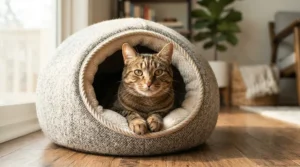
| Floor-level cat cave bed | High | Low-Medium | Very high | Seniors, low-mobility cats |
| Cardboard box | Medium | Medium | Low | Short-term trials |
Reading across, the cubby tree is the only option that gives vertical territory and a hideaway in one footprint, which matters when floor space is tight. Open perches lose on seclusion but win on sightlines. The floor-level cave bed is a better fit for older cats who can’t jump anymore.
A big cat condo with roomy hideaway also solves a quiet household problem: the cat who vanishes under the bed during visitors now has a better address.
Cat Tree With Oversized Cave for Large Cats: Where the Marketing Stretches the Truth
“Oversized” and “extra large” carry no standard definition, so a cat tree with oversized cave for large cats can mean anything from a roomy 18-inch nook to a barely upgraded 12-inch cube. Judge the cave by its numbers, not its adjective.
Three filters cut through the hype:
- Weight rating per component. A cave rated to 22 pounds, like the condo on Yaheetech 63in, leaves little buffer for a 20-pound cat who jumps in.
- Width over length. A 21.7-inch-long cave that’s only 10.2 inches wide, as in the Gitelsnour 80.7-Inch listing, sounds huge and fits like a tunnel.
- Cat shape, not just weight. A long, lean 18-pounder and a stocky 18-pounder need different doors.
Features that do matter: a heavy base, solid hammock anchoring, and removable washable covers. Features that matter less: dangling toys (large cats often rip them off), faux-fur flourishes, and extra posts if the existing ones are thin.
When a cat tree with oversized cave for large cats earns the label, the proof is simple. Your cat walks in without hesitating, turns around, and settles.
Long-Term Cost and Maintenance
A cheap tree that dies in 18 months is not cheap. Here’s illustrative math, not a quote: a $70 tree replaced every two years costs about $35 per year, while a $160 tree lasting five years costs about $32 per year. Heavier, better-anchored trees like MWPO Extra Large and Gitelsnour Maine Coon 70-Inch tend to cost more upfront but wobble less over time.
The maintenance bill is small but real. Budget a few minutes monthly to tighten bolts, since vibration loosens them. Vacuum the cubby and wash removable covers, and replace worn sisal before your cat turns to the sofa. Particleboard frames, common at lower prices, handle moisture poorly, and some reviewers of the PAWZ Road 81 Inch warn that its cardboard-core posts may suffer in humid rooms.
The cheapest upgrade of all is a wall strap. It costs little and turns a wobbly tall tree into a safe one.
Setup Guide: Placement and Your Cat’s First 30 Days
Assembly is half the job. The other half is convincing a suspicious cat that your gift isn’t a threat.
Placement. Put the tree near a window or in a social room, beside a wall so it can be anchored into studs. Avoid high-traffic doorways, where a hiding cat feels exposed.
Week one. Leave the cubby alone. Tuck in a worn T-shirt or a pinch of catnip, and never push your cat inside. Forced entry teaches avoidance.
Weeks two to four. Rotate treats along the climbing path. Watch whether your cat prefers perch or cubby, then adjust. A 2024 study of 179 shelter cats examined how added resources like scratching posts and hiding places affect long-term stress, and the authors argue enrichment is crucial. In a home, that translates to giving your cat choices.
Common first-month mistakes:
- Skipping the wall strap on trees over about 60 inches
- Placing the cubby entrance flat against a wall
- Buying a second tree before the first one has had four weeks
Monthly checks: tighten bolts, vacuum, wash covers, and inspect hammock stitching.
Real-World Scenarios: Which Cubby Fits Which Home
The renter with a 22-pound Maine Coon. Low ceilings, no drilling allowed, 800 square feet. The Feandrea 40.6-Inch fits the room and the weight listing, and its low profile needs no anchoring. Pair it with a floor-level cave bed for the cubby time it lacks.
The three-cat household. Two Ragdolls and a 14-pound shorthair compete daily for the same spot. PAWZ Road 81 Inch, with three openings per cave, gives everyone an exit. MWPO Extra Large adds a third condo if turf wars persist.
The shy rescue who hides. Seventeen pounds, startled by the doorbell. Choose the Globlazer F61 for its published cubby size, then place it in a quiet corner. A single-door cubby suits her better than an airy fabric nest.
The tight budget. Under $90, one cat under 18 pounds. Yaheetech 63in gives a strong review base, and a wall strap adds security.
FAQ: Large Cat Tree With Enclosed Cubby for Big Cats
❓ How much weight can an enclosed cubby on a cat tree actually hold?
❓ Will my big cat actually use the cubby?
❓ Do I really need to anchor a tall cat tree to the wall?
❓ Can two big cats share one enclosed cubby?
❓ How do I clean a cubby that smells like cat?
Conclusion: Which Large Cat Tree With Enclosed Cubby for Big Cats Should You Buy?
The right large cat tree with enclosed cubby for big cats comes down to three numbers: cubby interior dimensions, entry hole diameter, and ventilation openings. Height and toy count are decoration by comparison.
Here’s the quick verdict. For multi-cat homes, PAWZ Road 81 Inch gives the best traffic flow. For the heaviest cats, Gitelsnour Maine Coon 70-Inch has the strongest reviewer backing. For small spaces and tight budgets, Feandrea 40.6-Inch and Yaheetech 63in do the most with the least. If published cubby size is your top priority, Globlazer F61 is the most transparent, while Globlazer Giant F83 and MWPO Extra Large suit high ceilings and airflow-first households.
Whatever you choose, anchor it, measure your cat, and give the cubby a few weeks before judging it. A big cat condo with roomy hideaway is a place your cat will return to for years, and that’s the real return on investment.
✨ Ready to Give Your Big Cat a Hideaway That Fits?
🐾 Check current pricing and availability on your favorite pick above, and treat your cat to a cubby they won’t outgrow. Your furniture, and your cat’s shoulders, will thank you!
Recommended for You
- Cat Tree for Large Breeds With Jumbo Hammock: 7 Best Picks 2026
- Cat Tree With Wide Platforms for Big Cats: 7 Sturdy Picks (2026)
Disclaimer: This article contains affiliate links. As an Amazon Associate, I earn from qualifying purchases. If you purchase products through these links, we may earn a small commission at no additional cost to you.
✨ Found this helpful? Share it with your friends! 💬🤗
